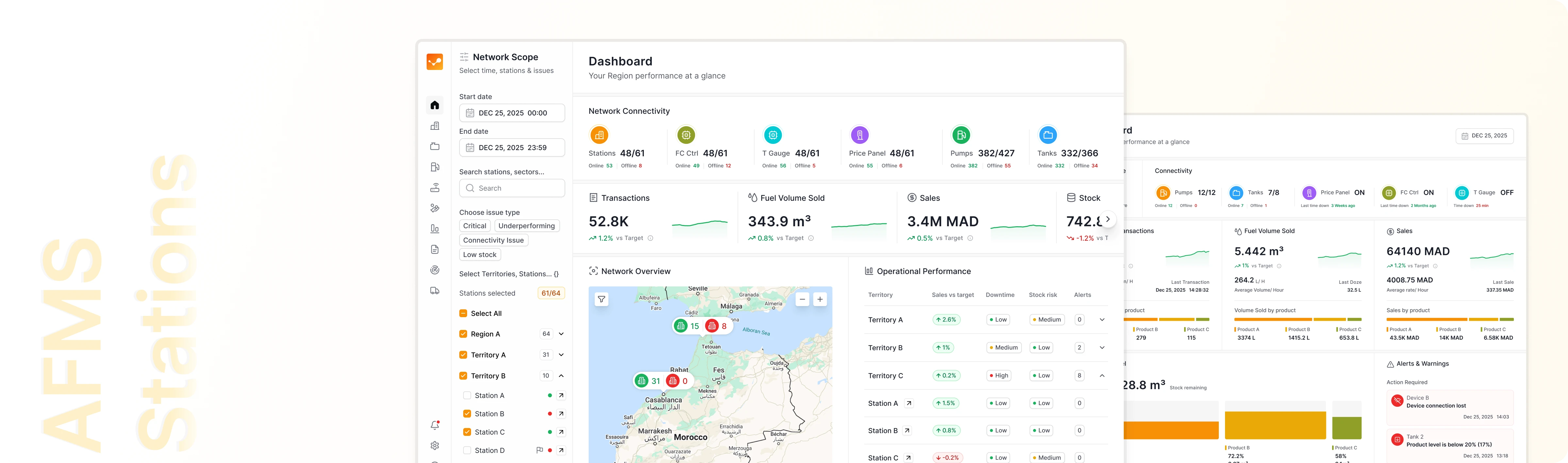
Project under NDA. Some details have been generalized or blurred for confidentiality.
Project under NDA. Some details have been generalized or blurred for confidentiality.
AFMS Stations
AFMS Stations
Restructuring a Multi-Role B2B Platform for
Scale
Restructuring a Multi-Role B2B Platform for
Scale
Led the restructuring of a complex operational platform used by large energy companies. Focused on reducing structural complexity, introducing role-aware experiences, and establishing a scalable design foundation to enable faster decision-making, lower cognitive load, and long-term product sustainability.
Led the restructuring of a complex operational platform used by large energy companies. Focused on reducing structural complexity, introducing role-aware experiences, and establishing a scalable design foundation to enable faster decision-making, lower cognitive load, and long-term product sustainability.
Enterprise B2B SaaS
Post PMF Optimization
INDUSTRY
INDUSTRY
Energy / Enterprise Operations
Energy / Enterprise Operations
ROLE
ROLE
Product Designer - Full-time
(Product strategy, UX, UI, System
Architecture, Design System)
Product Designer - Full-time
(Product strategy, UX, UI, System
Architecture, Design System)
TEAM
TEAM
CEO
CEO
Engineering Team
Engineering Team
Project Manager
Project Manager
TIMELINE
TIMELINE
May 2025 - Dec 2025
May 2025 - Dec 2025
Context
Context
AFMS Stations is an operational SaaS platform used by enterprise energy companies to monitor and manage fuel station networks at scale.
The product had achieved strong market adoption and was actively supporting critical
day-to-day operations.
But success introduced a new challenge:
As the platform expanded to support more features, data, and user types, its underlying structure struggled to keep pace.
What once functioned as a shared interface began creating friction across the organization.
At this stage, the challenge was no longer product validation — it was ensuring the platform could scale without collapsing under growing complexity.
AFMS Stations is an operational SaaS platform used by enterprise energy companies to monitor and manage fuel station networks at scale.
The product had achieved strong market adoption and was actively supporting critical
day-to-day operations.
But success introduced a new challenge:
As the platform expanded to support more features, data, and user types, its underlying structure struggled to keep pace.
What once functioned as a shared interface began creating friction across the organization.
At this stage, the challenge was no longer product validation — it was ensuring the platform could scale without collapsing under growing complexity.
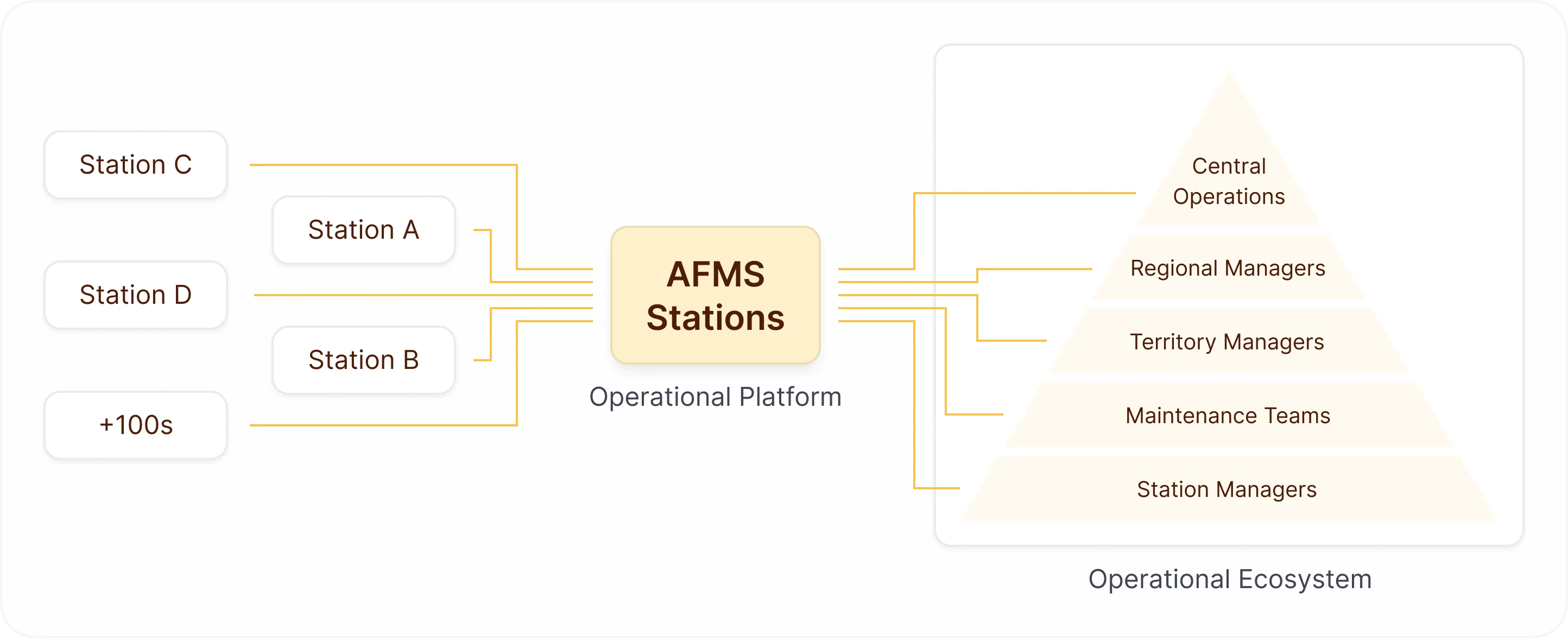
AFMS Stations within the operational system.
AFMS Stations within the operational system.
Desired Business
Outcome
Desired Business Outcome
Desired Business
Outcome
Improve operational efficiency at scale by:
Improve operational efficiency at scale by:
Reducing structural complexity
Reducing structural complexity
Supporting multiple roles with distinct needs
Supporting multiple roles with distinct needs
Enabling faster, more confident decision-making
Enabling faster, more confident decision-making
Strengthening the platform’s long-term scalability
Strengthening the platform’s long-term scalability
The Problem
The Problem
As adoption increased, structural strain became visible across the product:
• Feature growth introduced accumulating design debt
• Different roles were forced into the same interface despite different responsibilities
• Information density made critical signals harder to detect
• Navigation became heavier as the platform expanded
• Overlapping data created confusion across workflows
• New users required training to perform basic tasks
The issue wasn’t missing functionality.
It was structural.
One complex system was trying to serve everyone , regardless of context.
As adoption increased, structural strain became visible across the product:
• Feature growth introduced accumulating design debt
• Different roles were forced into the same interface despite different responsibilities
• Information density made critical signals harder to detect
• Navigation became heavier as the platform expanded
• Overlapping data created confusion across workflows
• New users required training to perform basic tasks
The issue wasn’t missing functionality.
It was structural.
One complex system was trying to serve everyone , regardless of context.
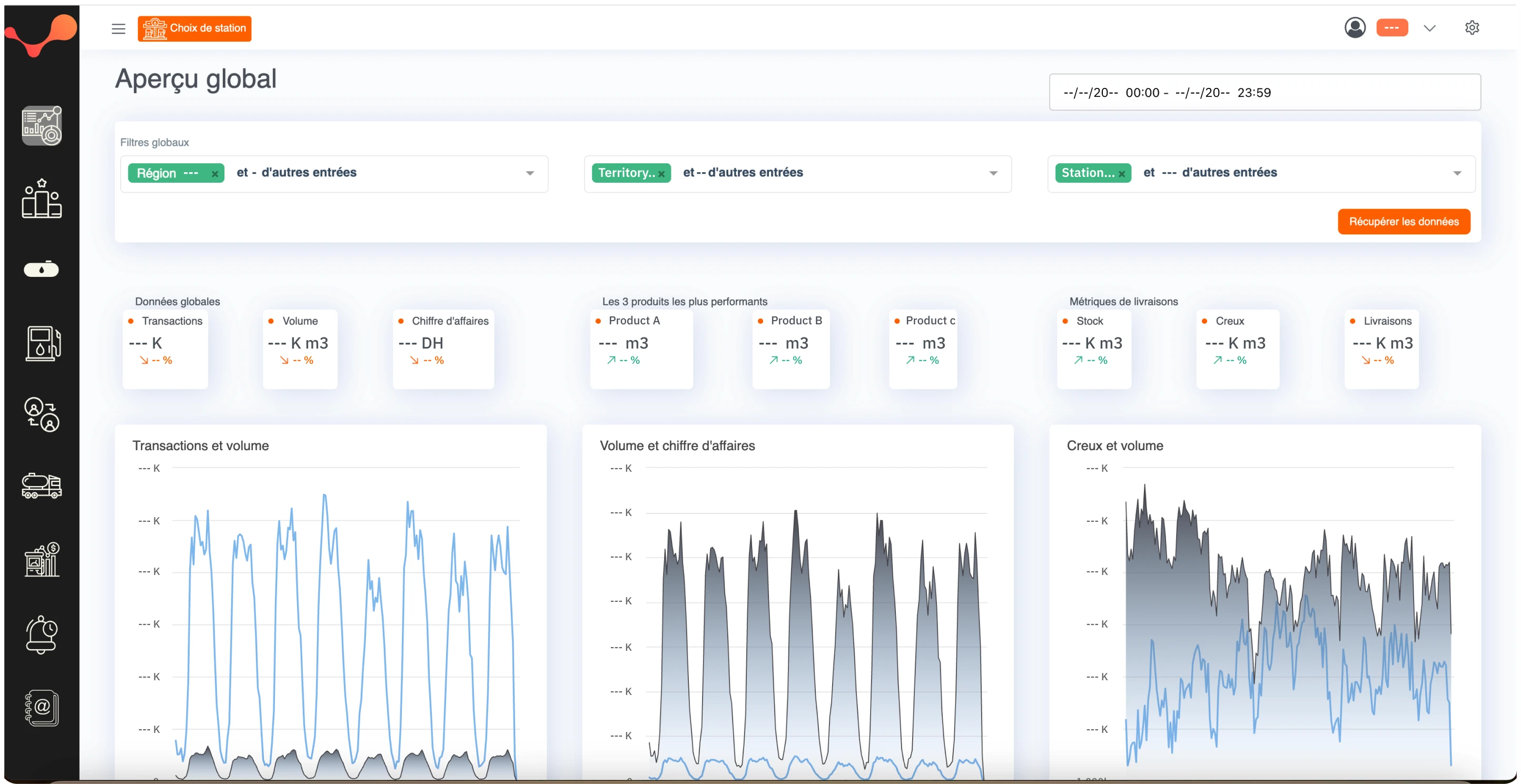
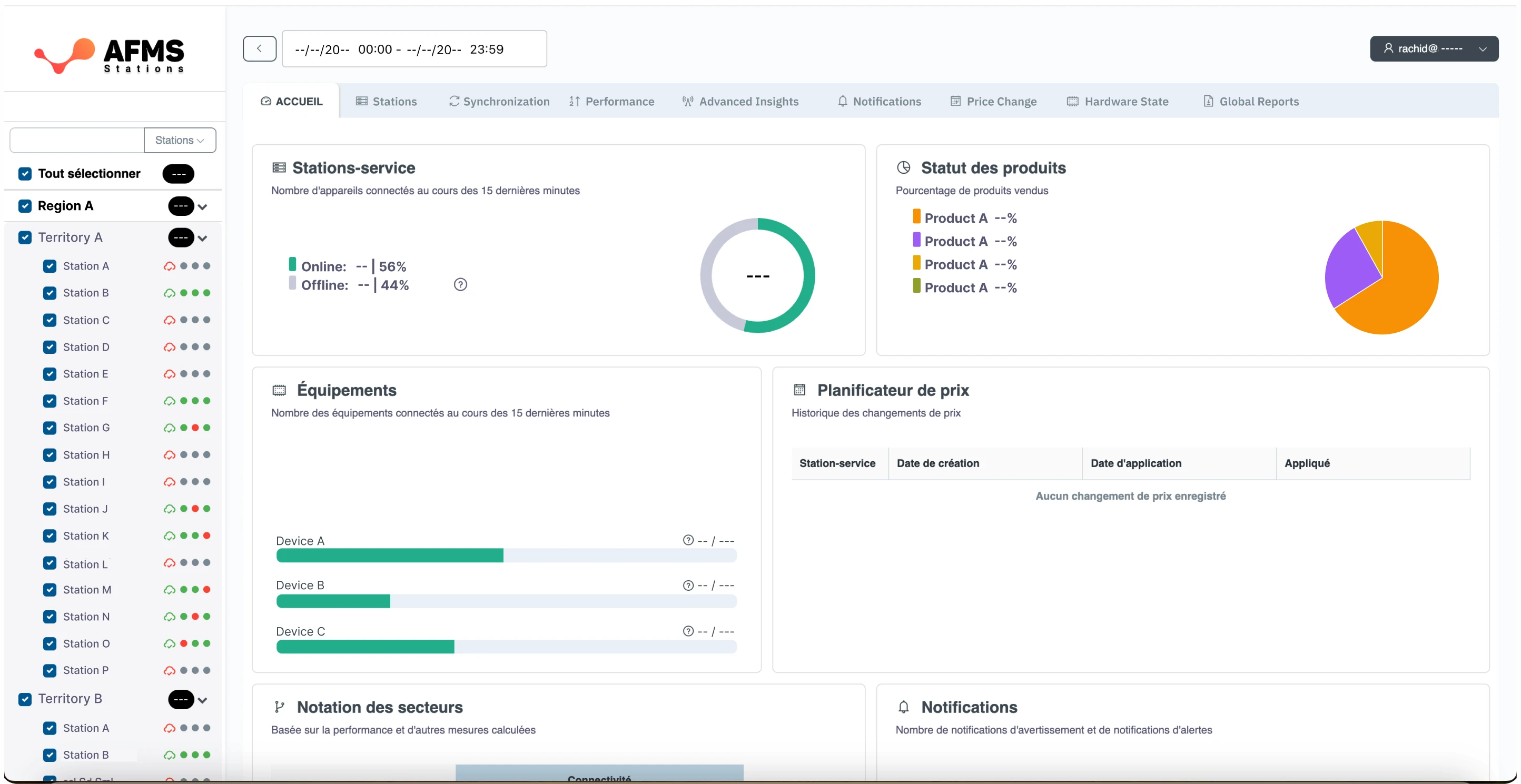
These dashboards represent two operational views frequently used by the same roles, requiring users to navigate between multiple structures to form a complete understanding of system performance.
(Sensitive operational data has been anonymized for confidentiality).
These dashboards represent two operational views frequently used by the same roles, requiring users to navigate between multiple structures to form a complete understanding of system performance.
(Sensitive operational data has been anonymized for confidentiality).
Key Product
Decisions
Key Product Decisions
Key Product
Decisions
Rather than redesigning features in isolation, the direction focused on restructuring the product around roles, scale, and decision context.
The shift was fundamental:
Rather than redesigning features in isolation, the direction focused on restructuring the product around roles, scale, and decision context.
The shift was fundamental:
From
From
A largely unified operational structure serving multiple roles with different responsibilities
A largely unified operational structure serving multiple roles with different responsibilities
To
To
A role-aware product architecture aligned with real operational responsibilities and decision needs
A role-aware product architecture aligned with real operational responsibilities and decision needs
This decision directly supported the business goal of improving speed, clarity, and effectiveness across the organization.
This decision directly supported the business goal of improving speed, clarity, and effectiveness across the organization.
Strategic Design
Principles
Strategic Design Principles
Strategic Design
Principles
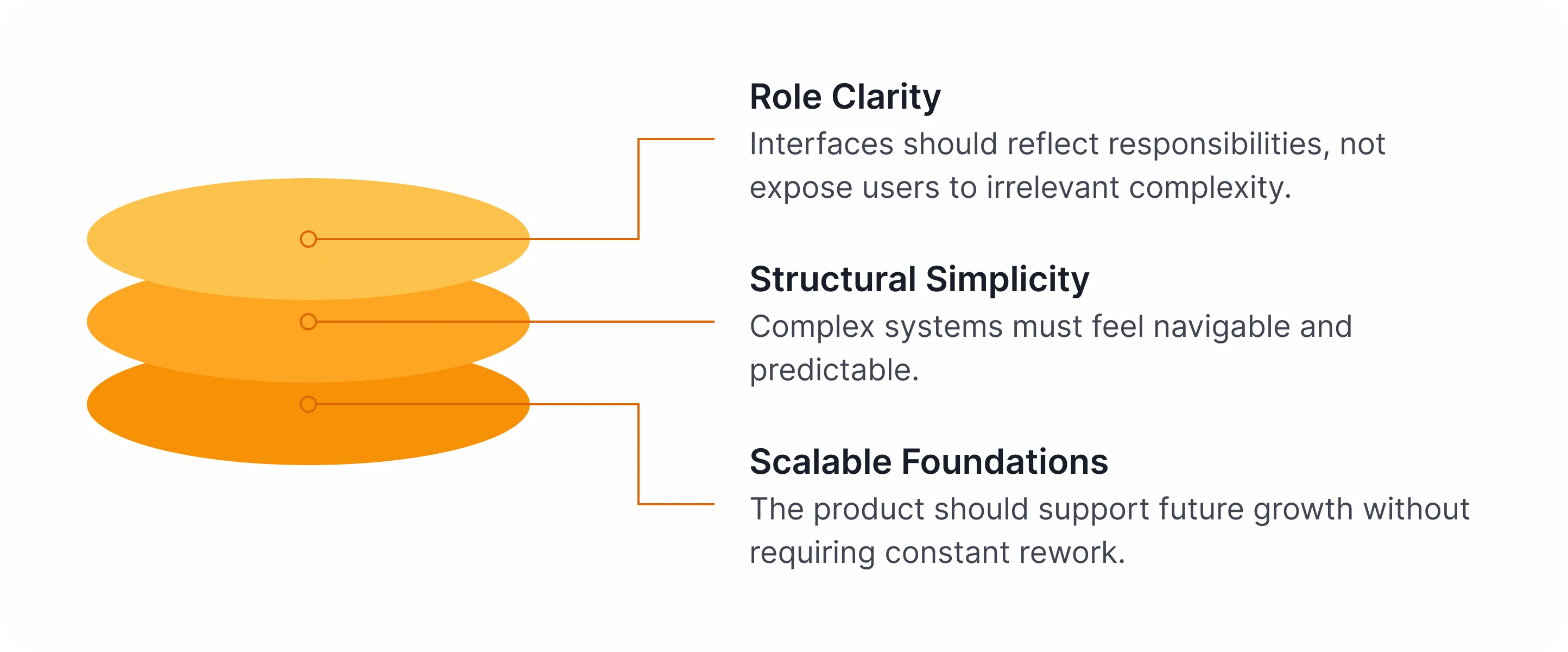
Moving forward, three principles guided every product decision:
Moving forward, three principles guided every product decision:
Solution
Solution
Rather than optimizing individual features, the work focused on restructuring the platform to support operational scale, diverse responsibilities, and long-term product evolution.
Rather than optimizing individual features, the work focused on restructuring the platform to support operational scale, diverse responsibilities, and long-term product evolution.
Role-Based Product Architecture
Role-Based Product Architecture
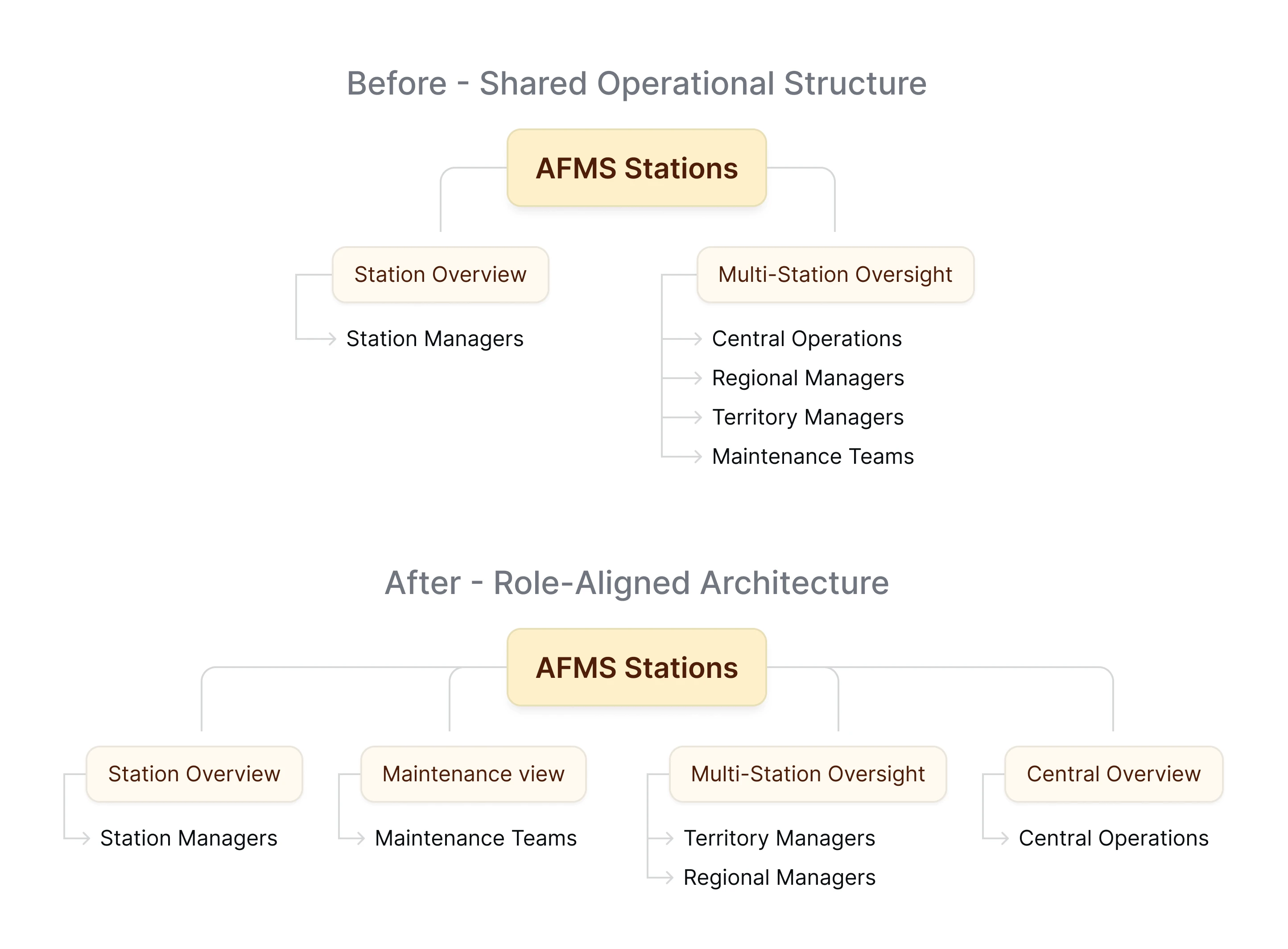
As the platform matured, a largely shared operational environment could no longer support roles with fundamentally different responsibilities.
The product was restructured into dedicated role-based environments for:
• Single-station operations
• Multi-station oversight
• Maintenance and infrastructure monitoring
This shift reduced complexity, improved focus, and enabled faster execution across enterprise teams.
As the platform matured, a largely shared operational environment could no longer support roles with fundamentally different responsibilities.
The product was restructured into dedicated role-based environments for:
• Single-station operations
• Multi-station oversight
• Maintenance and infrastructure monitoring
This shift reduced complexity, improved focus, and enabled faster execution across enterprise teams.
Decision-Focused Dashboards
Decision-Focused Dashboards
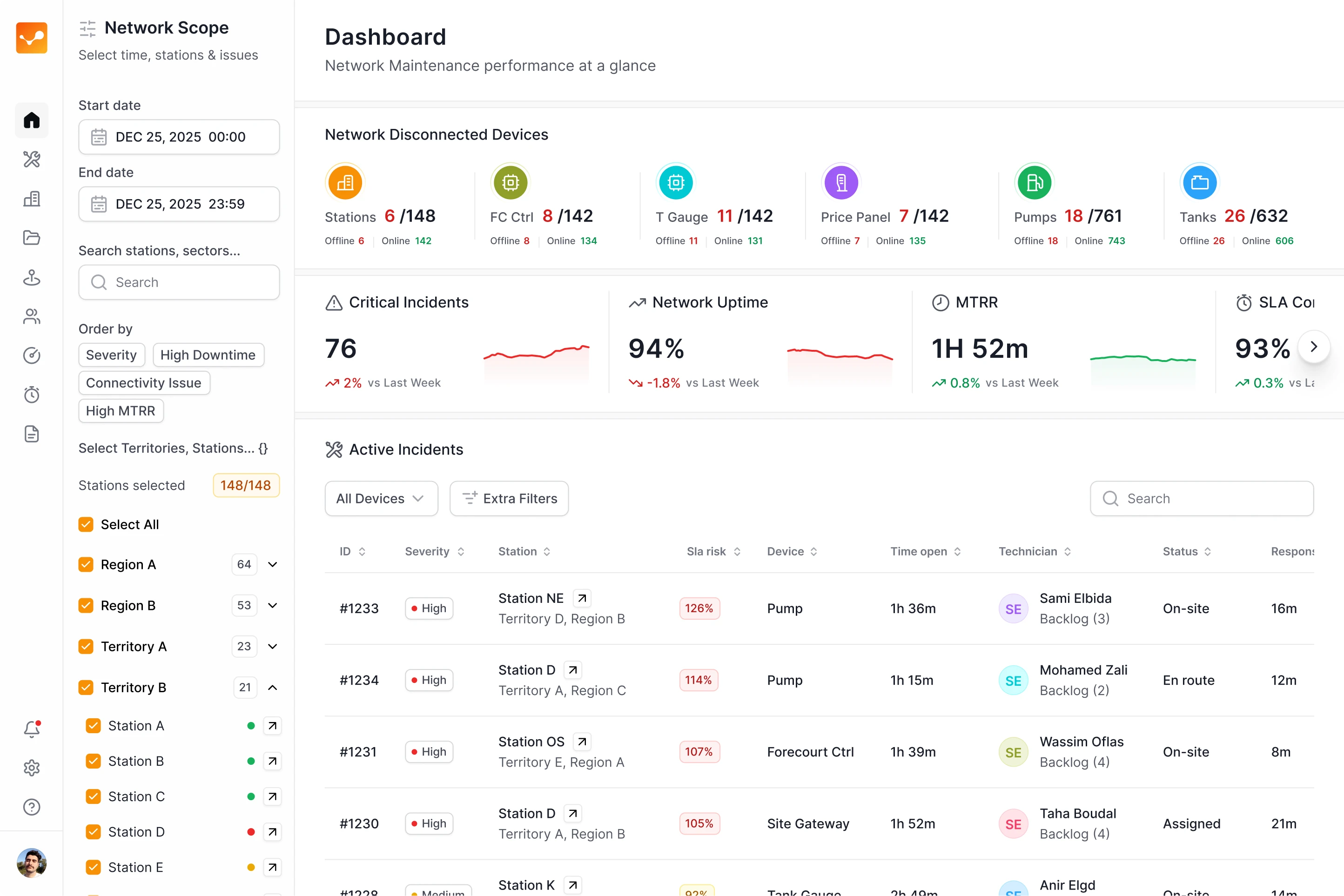
A generalized dashboard had accumulated signals for very different users, creating noise and slowing decision-making.
Role-specific dashboards were introduced to surface the metrics and system signals most relevant to each operational layer, enabling quicker interpretation and more confident action.
Noise decreased, Clarity increased.
A generalized dashboard had accumulated signals for very different users, creating noise and slowing decision-making.
Role-specific dashboards were introduced to surface the metrics and system signals most relevant to each operational layer, enabling quicker interpretation and more confident action.
Noise decreased, Clarity increased.
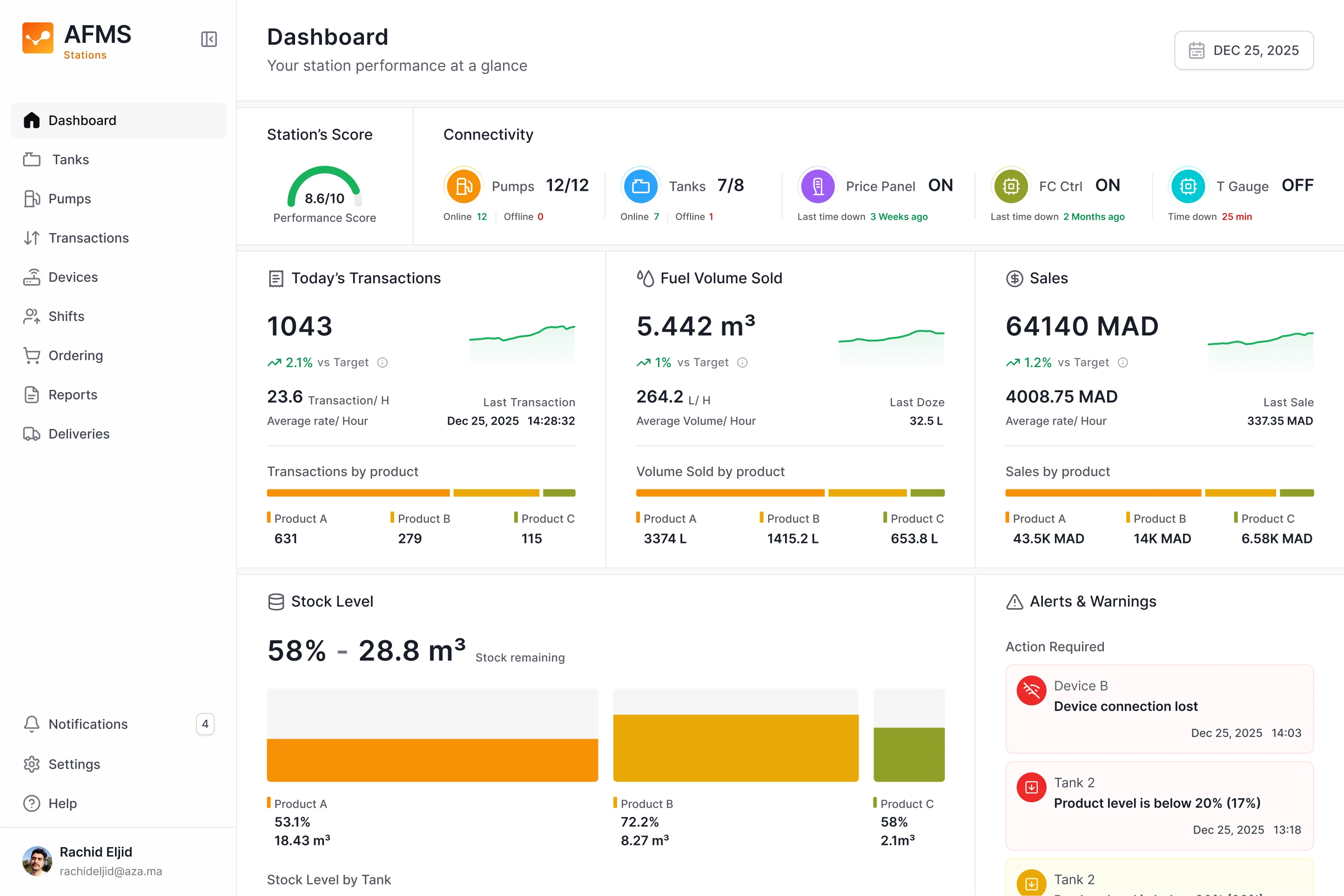
Single-Station Dashboard (Station Managers)
Single-Station Dashboard (Station Managers)
Daily performance, stock, and operational clarity.
Daily performance, stock, and operational clarity.
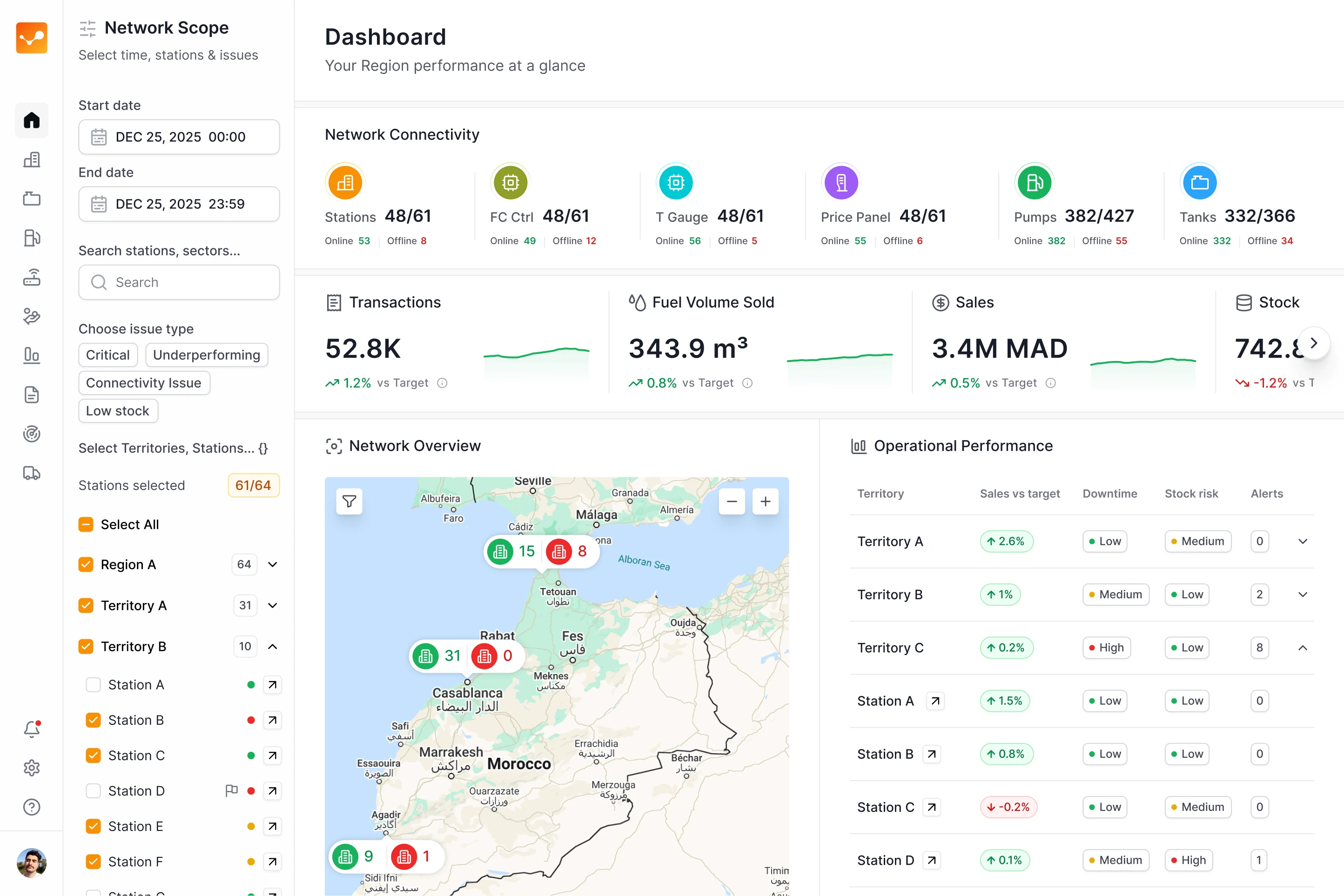
Multi-Station Oversight (Territory / Regional Managers)
Multi-Station Oversight (Territory / Regional Managers)
Cross-location performance and risk control.
Cross-location performance and risk control.
Maintenance Command Dashboard (Maintenance Teams)
Maintenance Command Dashboard (Maintenance Teams)
Incident prioritization and uptime control.
Simplified Information Architecture
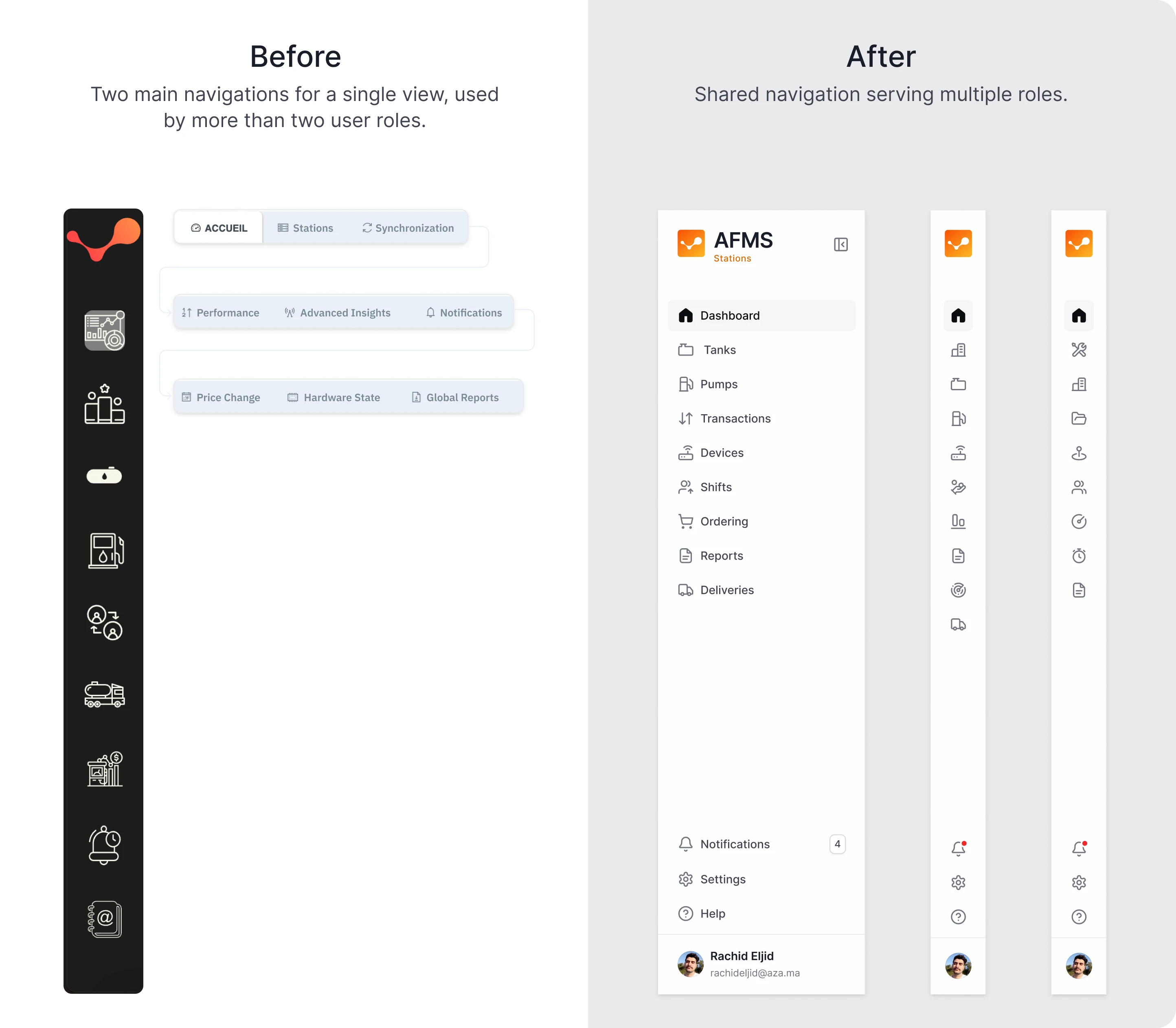
Simplified Information Architecture
Navigation and hierarchy were redesigned to create a clearer mental model within each role environment.
Users could quickly understand where they were, what they were responsible for, and which actions were available, improving learnability while preparing the platform for continued growth.
Navigation and hierarchy were redesigned to create a clearer mental model within each role environment.
Users could quickly understand where they were, what they were responsible for, and which actions were available, improving learnability while preparing the platform for continued growth.
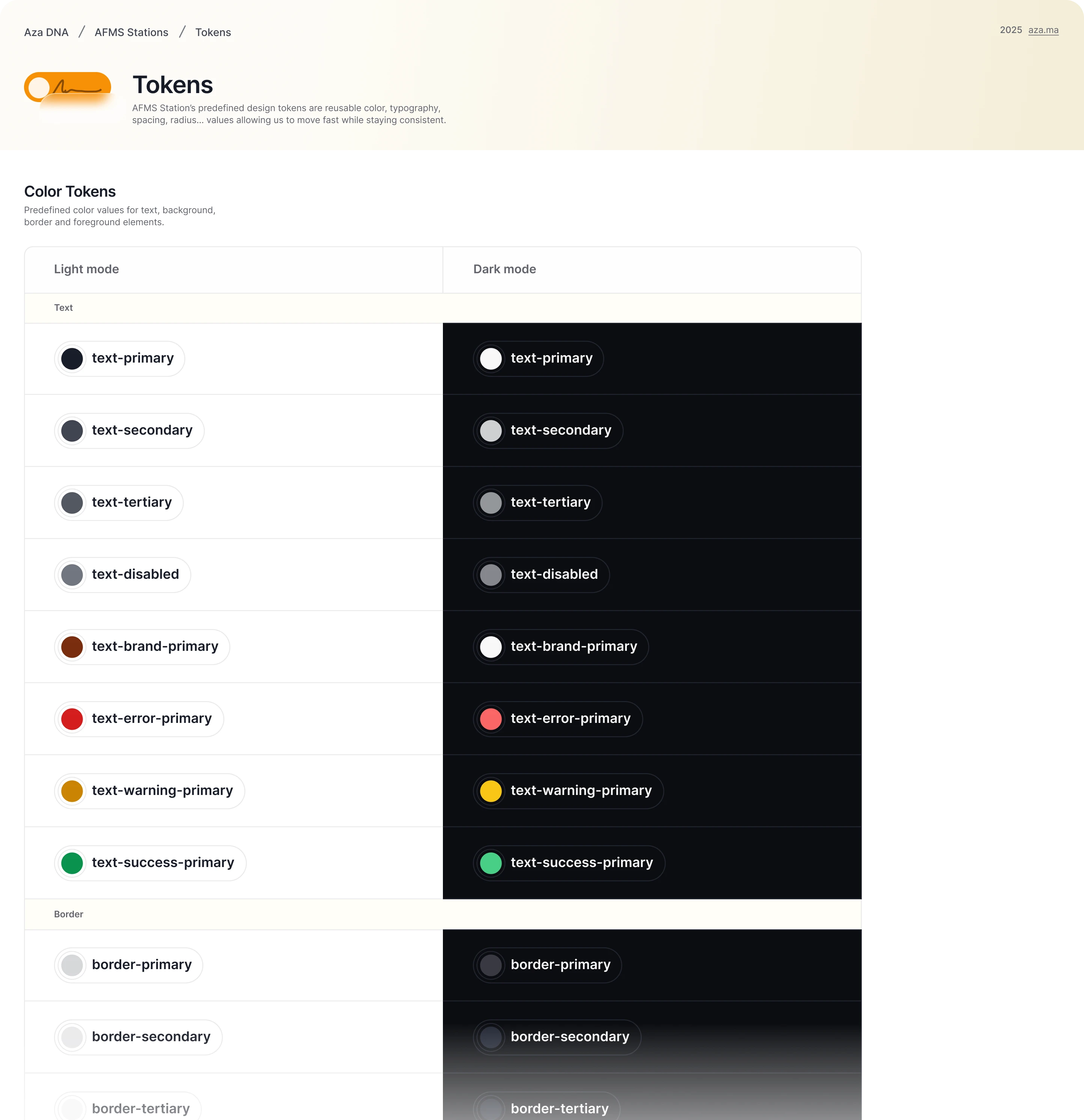
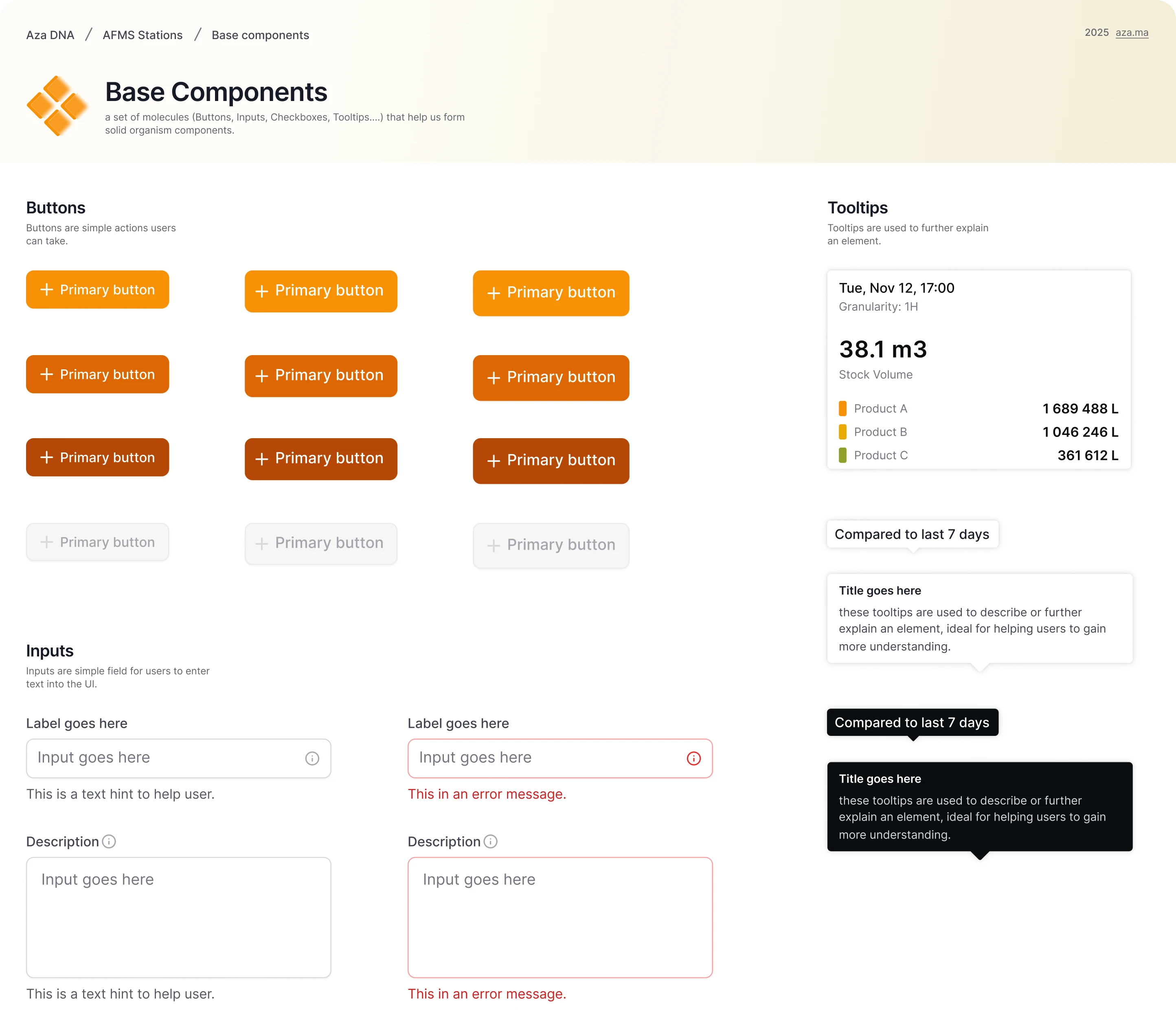
Design System & Visual Foundation
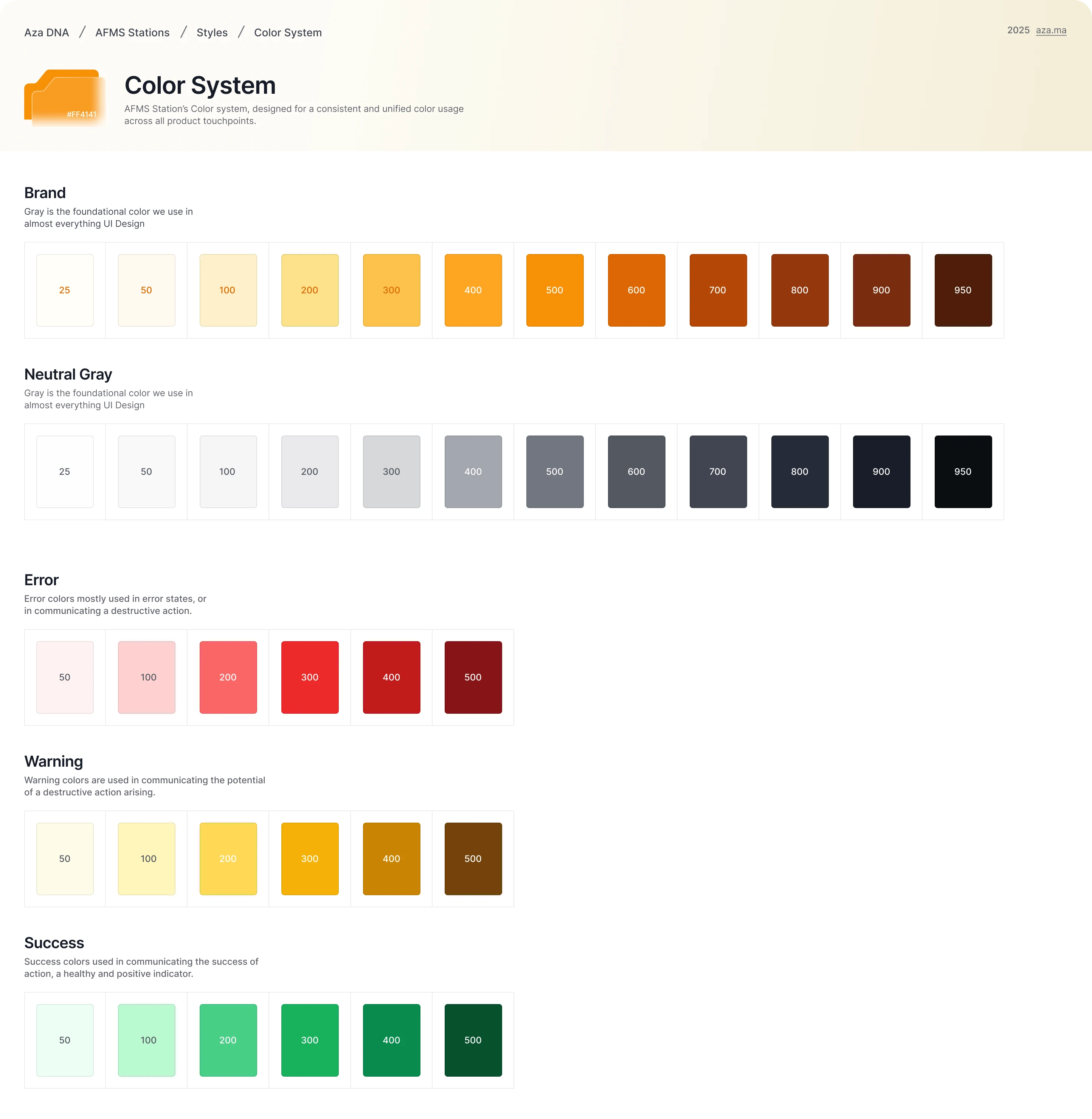
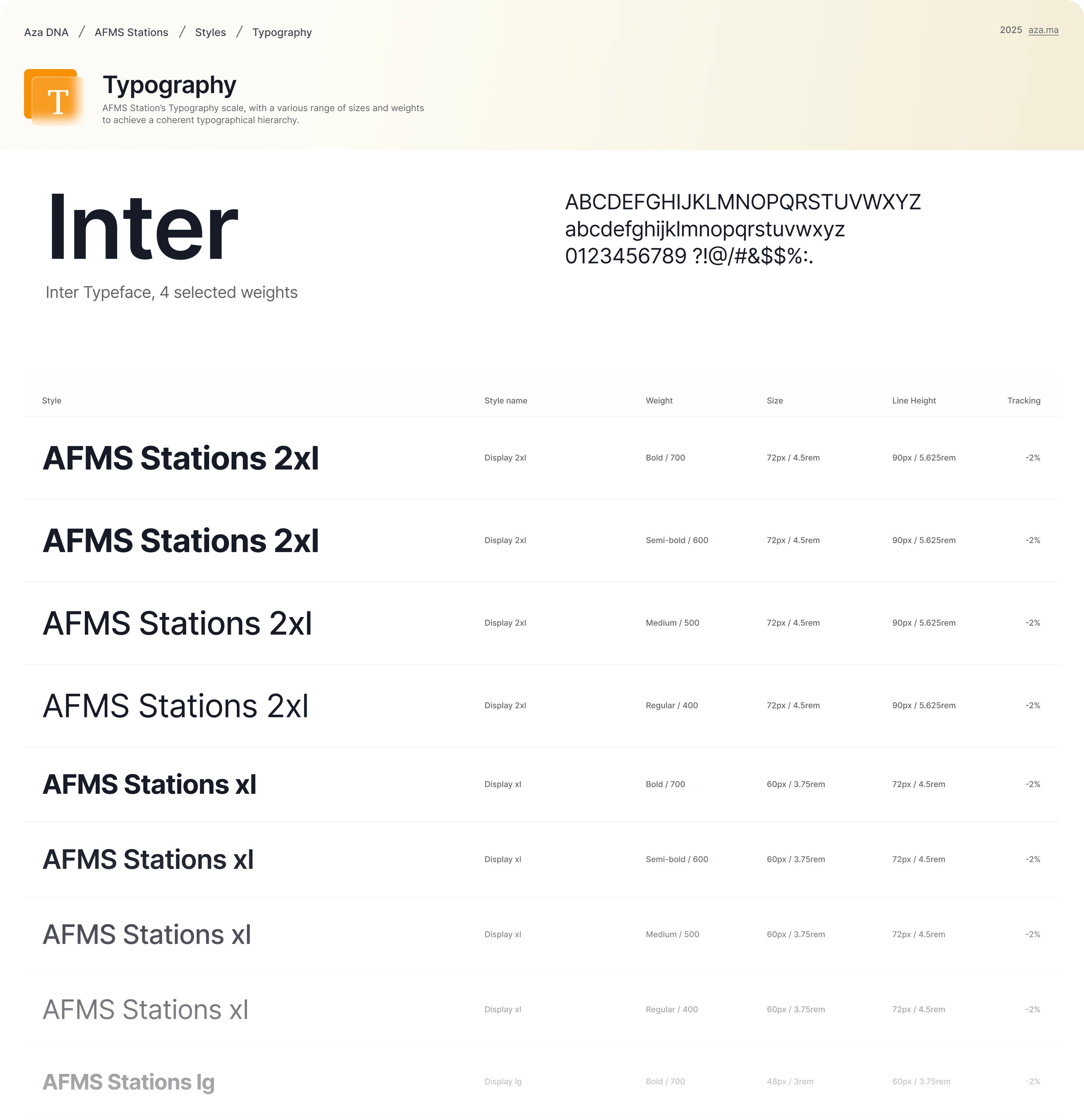
Design System & Visual Foundation
A unified design foundation introduced consistency across components, typography, and interaction patterns, strengthening usability while creating a scalable base for future product development.
A unified design foundation introduced consistency across components, typography, and interaction patterns, strengthening usability while creating a scalable base for future product development.
Impact
Impact
The restructuring established a stronger operational backbone for the platform:
The restructuring established a stronger operational backbone for the platform:
Faster task completion across operational workflows
Faster task completion across operational workflows
Reduced onboarding and training effort
Reduced onboarding and training effort
Greater clarity across roles and responsibilities
Greater clarity across roles and responsibilities
Lower cognitive load in daily usage
Lower cognitive load in daily usage
A scalable foundation ready to support continued growth
A scalable foundation ready to support continued growth
The product became easier to operate, easier to extend, and more resilient to future complexity.
The product became easier to operate, easier to extend, and more resilient to future complexity.
Key Insight
Key Insight
At scale, complexity doesn’t come from features, it comes from serving different roles with the same structure.
Designing around responsibilities, not screens, is what allows enterprise products to grow sustainably.
At scale, complexity doesn’t come from features, it comes from serving different roles with the same structure.
Designing around responsibilities, not screens, is what allows enterprise products to grow sustainably.

Let’s Talk About
your Project
Let’s discuss the challenges you’re facing and
see if we’re a good fit.
contactrachideljid@gmail.com
Rachid Eljid - V2.0 - 2026 ©
Rachid Eljid - V2.0 - 2026 ©
Based in AGADIR, MOROCCO - Working Globally
Based in AGADIR, MOROCCO - Working Globally
